Street Wisdom and the Call of Battle: Iranian Nationalism After February 28
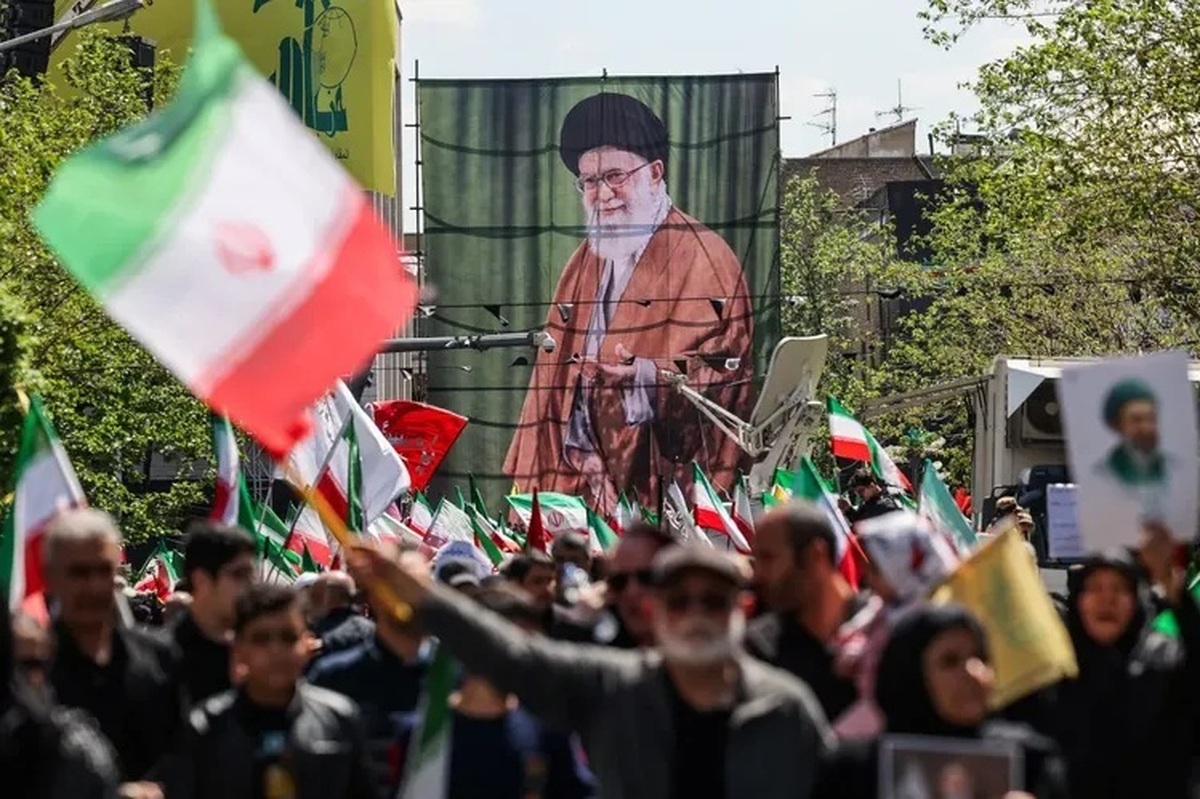
Media outlets like CNN analyze developments in Iran solely from the perspective of intra-governmental rivalries and attribute every street movement to factions, because such a narrative reduces the public presence to the mobilization of a political faction and ignores the more complex and independent reality of the street.
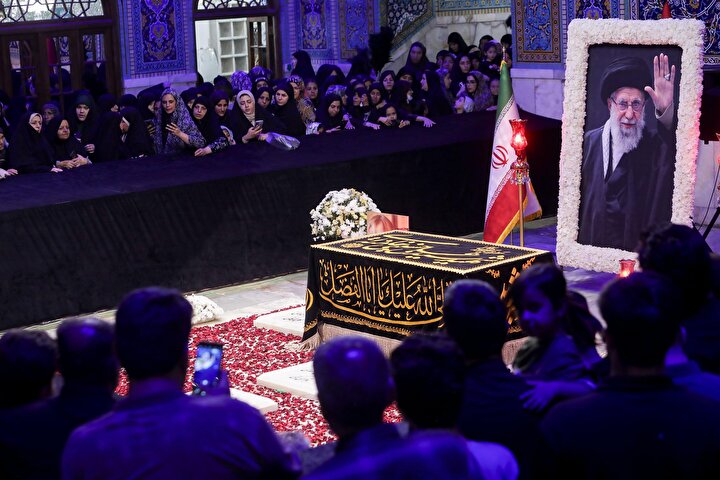
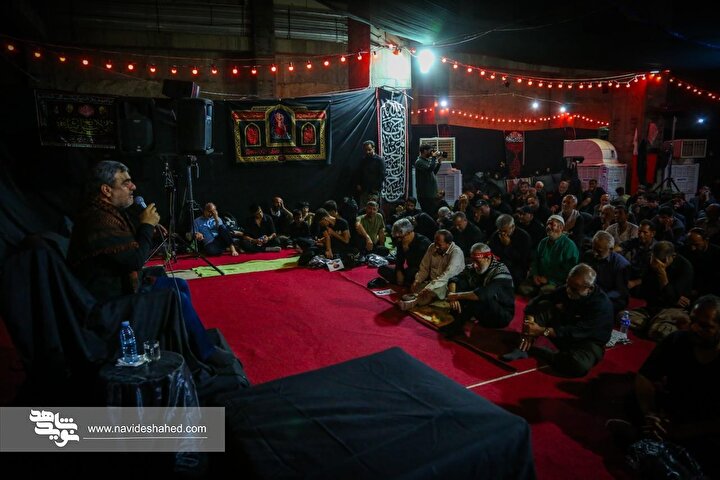
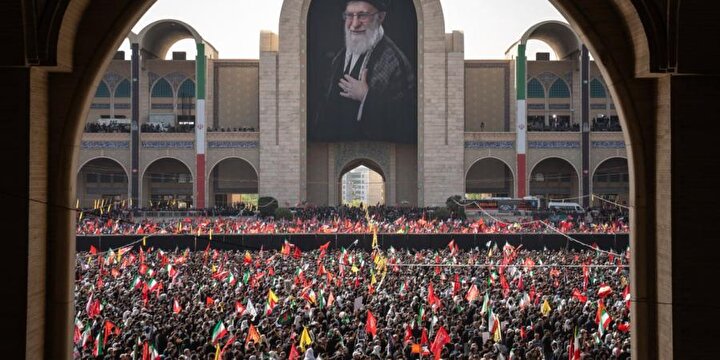
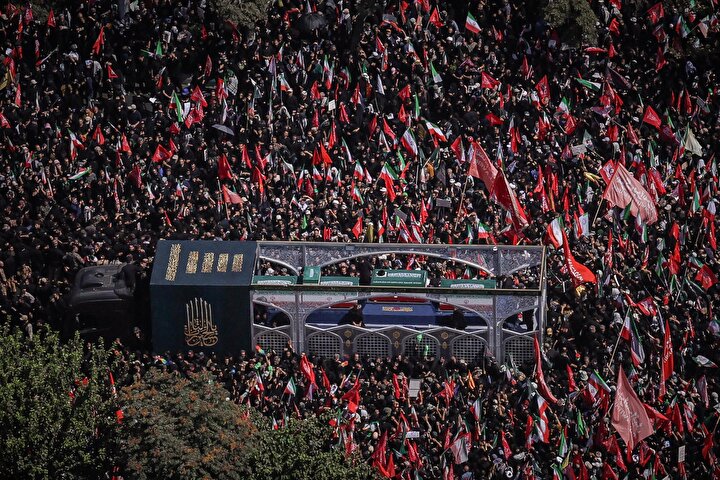
The war against Iran began on the morning of February 28, 2026, with joint attacks by the United States and the Zionist regime on Tehran. These attacks, which led to the martyrdom of His Eminence Ayatollah Seyed Ali Khamenei, created a major shift in how the people's social response manifested, compared to the 12-Day Imposed War. Following the official announcement of the news of the Supreme Leader of the Islamic Revolution's martyrdom at dawn on February 29, 2026, broad segments of the public spontaneously took to the streets and held mourning ceremonies for the martyred revolutionary leader. This turnout was a prelude to the nightly gatherings that would follow in the coming nights, which have continued for over 70 nights now and have never stopped under any circumstances, including various holidays, cold weather, and bombings.
What is happening on the streets of Iran in recent weeks and months cannot be explained simply using conventional political vocabulary. Meanwhile, mainstream global media have been trying to ignore and censor this important event, refraining from any coverage of these gatherings, hoping that the fervor of this national movement would cool down over time and the people's presence would gradually diminish and fade away. After the people's continued presence in the streets, the global media, finding themselves compelled to cover the event, pursued a line of "containment" and "limitation." Media outlets such as CNN have tried to produce a confused and distorted narrative of the nightly gatherings, attempting to confine this national assembly to a specific political spectrum, thereby seeking to create division among the Iranian people.
The dominant narrative of global media, which seeks to reduce this phenomenon to factional rivalries, the machinations of specific political groups, or even merely emotional reactions stemming from wartime conditions, suffers from an analytical error in understanding the true nature of these gatherings. The reality is that Iran today is witnessing a type of social and identity rearrangement, the roots of which must be sought much deeper than everyday political squabbles; a rearrangement born from the shared experience of danger, external pressure, war, and insecurity, and which now manifests itself in the form of street gatherings whose most important characteristic is not anger, hatred, or social disintegration, but rather a desire for national synergy.
Over the past four decades, Iran has been the scene of numerous gatherings, protests, movements, and crises. Each of these events carried a part of the reality of Iranian society, and each represented real rifts within Iran. The common feature of all these past gatherings was that they placed society in a state of polarization. In this state, social groups moved not towards finding a common language, but towards intensifying divergence. In such an atmosphere, even when legitimate social demands were raised, the psychological structure of society moved towards binary oppositions; binaries that gradually led to the erosion of social capital, the weakening of public trust, and an increase in national anxiety.
But what is happening in Iran today possesses different characteristics in various respects. For the first time in years, the street has become not an arena of mutual exclusion, but an arena for redefining a new kind of solidarity. Unlike many previous events, these gatherings are not forming around the axis of negating one another, but around the axis of reconstructing an Iranian "us." This very characteristic turns these gatherings into an unprecedented phenomenon in Iran's contemporary history.
The significant error of foreign media begins precisely at this point. Media like CNN, due to their established analytical frameworks, primarily understand Iran's developments through the lens of power struggles within the establishment. In this framework, any street movement must necessarily be either an extension of the reformist-principalist conflict or be attributed to specific ideological blocs. For this reason, they try to define the recent gatherings under the name of certain political groups, as if what is happening on the street is merely the mobilization of a particular political faction.
This is while the existing social reality is far more complex and extensive than such narratives. The demographic composition of these gatherings, the presence of diverse social strata, the variety of political leanings, the presence of different generations, and even the clear differences in the lifestyles of participants, show that we are not facing a merely factional movement. What is emerging is more of a type of "reproduced nationalism" in the context of crisis; a nationalism that strives, after years of division, to once again reconstruct the concept of "Iran" as a connecting point for various groups.
In this context, the issue of religion also holds particular importance. Many who consider themselves more "Iranian" than religious still connect with Shiite language and symbols, because in Iran, these symbols carry not only religious meaning but also historical memory, epic, resistance, collective mourning, justice-seeking, and historical continuity.
From a political sociology perspective, what is happening now can be seen as a type of "national identity reconstruction under conditions of external threat." In many societies, war or external threat leads to social breakdown, but in Iran, this same threat has accelerated the process of redefining national unity. This difference has occurred in Iranian society due to its unique characteristics, the continuation of which has successfully broken through the barrier of global censorship and has been reflected in international media.
If these gatherings are to become the starting point of a new phase in Iran's history, they must be kept away from any factional appropriation or monopolization. Historical experience has shown that any inclusive social movement erodes when a particular group tries to introduce itself as its sole owner. Such a process quickly makes other social groups feel excluded and alienated, internally destroying the movement's social capital. Therefore, the first necessity is maintaining polyphony alongside unity. This means that this movement must be able to simultaneously cover religious and non-religious, traditional and modern, conservative and critical, urban and rural, and different age groups under a shared national identity.
The second necessity is the formation of an independent and national media narrative. As long as the narrative of these gatherings is reflected only by foreign or factional media, its true image will be distorted, whether intentionally or not. A society that wants to enter a new phase must be able to produce its own narrative about itself. This narrative should focus on human diversity, the presence of different social strata, the shared experience of war and crisis, and the general desire to maintain national cohesion.
The third issue is avoiding exclusionary radicalism. For any national movement to remain sustainable, it must have the capacity to attract. The language of elimination, labeling, vilification of domestic opponents, and dividing society into "us" and "them" is precisely what can destroy this historical opportunity and fulfill the media line of the international media. National unity is only sustainable when people feel that they are still part of a collective "us" without needing to be homogenized./ Defapress.ir